Domestic abuse can affect anyone – regardless of age, gender, sexuality, background or income. It includes any incident or pattern of controlling, coercive, threatening, degrading or violent behaviour by a partner, ex‑partner, family member or carer.
Experiencing domestic abuse can be frightening and isolating, but you are not alone, and support is available. As a GP practice, our team is committed to offering sensitive, non-judgemental support and guidance. If you or someone you know needs help, please reach out to us. We can arrange urgent appointments, support referrals, and referrals to specialist services.
The Domestic Violence Lead for Burton Croft Surgery is Dr Katie Doyle (f).
Our quick exit button takes you back to Burton Croft’s home page but does not delete this from your viewing history.
Silent Solutions Police
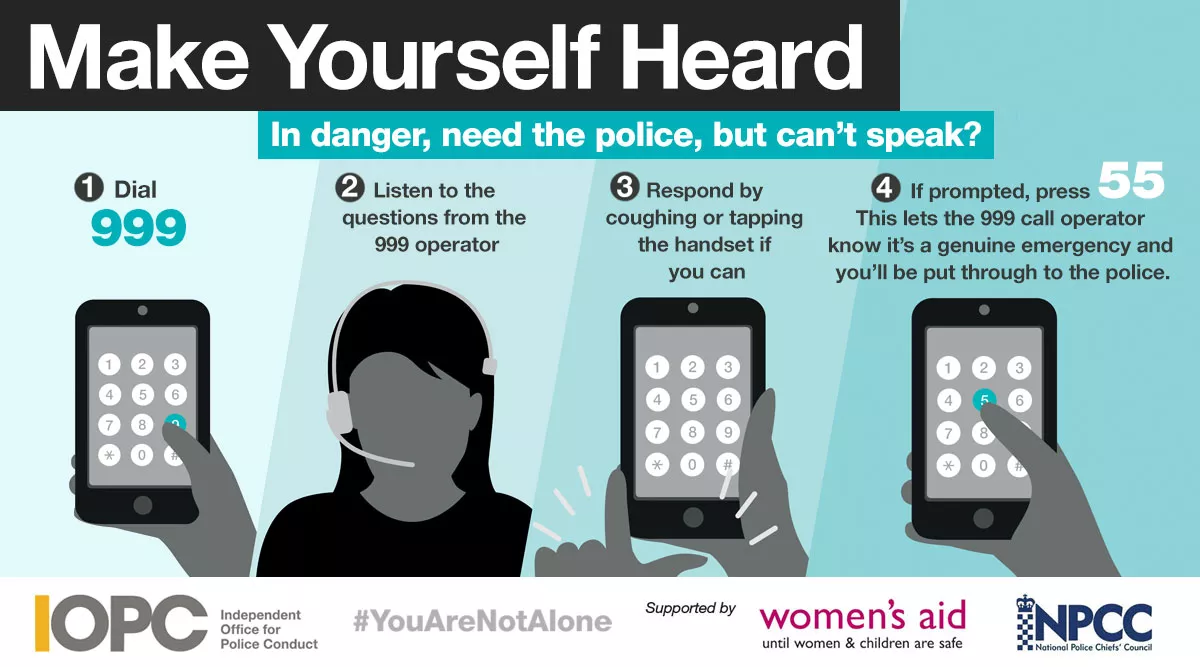
In an emergency call 999 for the police. If you cannot safely speak to the operator to ask for the Police, stay on the line and the call will be forwarded to an operating system. Press 55 to be transferred to the local police force as an emergency.
Press the arrow on the right hand side of the titles below to open and close each information box.
What is Domestic Abuse?
Domestic abuse can affect anyone – regardless of age, gender, sexuality, background or income. It includes any incident or pattern of controlling, coercive, threatening, degrading or violent behaviour by a partner, ex‑partner, family member or carer.
This can be:
- Physical (hitting, pushing, restraining)
- Emotional or psychological (threats, humiliation, intimidation, controlling what you do or who you see)
- Sexual abuse
- Financial abuse (controlling your money, debts in your name)
- Digital or online abuse (monitoring your phone, messages, social media)
- Honour‑based abuse, forced marriage or so‑called “honour” violence.
You do not have to wait until an emergency or until things get worse before asking for help.
What is Coercive Control?
Coercive control is a pattern of behaviour used to dominate, isolate and frighten another person, usually by a partner, ex‑partner or family member. It is recognised in UK law as a form of domestic abuse.
It is less about single incidents of violence and more about ongoing control that takes away a person’s freedom and sense of self.
Examples can include:
- Controlling day‑to‑day life
- Telling someone what they can wear, where they can go, who they can see.
- Monitoring their movements, phone, emails or social media.
- Insisting on knowing passwords or using tracking apps.
- Isolating from friends and family
- Stopping or discouraging contact with others.
- Creating conflict so the victim feels they have “no one else”.
- Financial control
- Taking control of all money, benefits or wages.
- Giving an “allowance” or making someone ask for money.
- Running up debts in their name.
- Emotional and psychological abuse
- Constant criticism, humiliation or belittling.
- Gaslighting – denying events, twisting reality so the person doubts their own memory or sanity.
- Threats to harm themselves, the victim, children or pets if the victim does not comply.
- Rules and punishments
- Setting “rules” about behaviour and punishing any “disobedience”.
- Unpredictable anger so the victim feels they are “walking on eggshells”.
In England and Wales, controlling or coercive behaviour in an intimate or family relationship is a criminal offence under the Serious Crime Act 2015 when it is repeated or continuous and has a serious effect on the victim (e.g. causing fear of violence or serious alarm/distress that has a substantial adverse effect on day‑to‑day activities).
Local and National Support
Leeds Domestic Violence Service (LDVS)
Support for people of all genders over the age of 16 that have been affected by domestic violence and/or abuse.
24 hour helpline: 0113 246 0401
Email: hello@ldvs.uk
Website: https://ldvs.uk/
Behind Closed Doors
Leeds based support for all genders.
Behind Closed Doors are there at the point of crisis and stay on to work with individuals and families through their recovery. They also deliver preventative activities in the form of training with services, charities, in the workplace and in educational settings.
Website: https://behind-closed-doors.org.uk/
Men’s Advice Line
Men’s Advice Line is a team of friendly Advisors who will listen and believe you, and offer you non-judgmental support, practical advice and information.
Their focus is to increase the safety of men including those who identify as trans, who are experiencing domestic abuse (and the safety of any children) by providing confidential support.
Telephone (Monday–Friday 10am-5pm): 0808 801 0327
Website: https://mensadviceline.org.uk/
Leeds Women’s Aid
Domestic Violence and Abuse Services for women in Leeds.
They can help with legal support, emergency refuge, community and group support, as well as emotional support and advice.
A drop in service is available Tuesday – Friday, for information on where these are held, please call the number below- this is in partnership with LDVS.
Telephone (24hours): 0113 246 0401
Website: Leeds Women’s Aid
An online chat is available Monday to Friday, 1pm to 4pm.
GALOP
Galop gives advice and support to people who have experienced biphobia, homophobia, transphobia, sexual violence or domestic abuse.
Galop operates the National Helpline for LGBT+ Victims and Survivors of Abuse and Violence.
Telephone: 0800 999 5428
Website: https://www.galop.org.uk/
Karma Nirvana
If you are experiencing Honour Based Abuse or facing a forced marriage, Karma Nirvana can help.
Telephone (M-F 9am to 5pm): 0800 599 9247
Website: https://karmanirvana.org.uk/
SignHealth
SignHealth are a charity who help to improve the health and wellbeing of Deaf people.
They run a Domestic Abuse Support service for Deaf People.
Text (M to F 9:30AM to 4:30PM): 07800 003421
Email: da@signhealth.org.uk
BrightSky app
Bright Sky is designed for anyone experiencing domestic abuse, or anyone who is worried about a friend, family member, or colleague.
The app is free to use and can help you to spot the signs of abuse, know how to respond, and find a safe route to support.
App Store (Apple): Bright Sky App
Google play (Android): Bright Sky
Refuge – Tech Safety
Refuge have a specialist tech safety website. It has information on how to keep your items safe from Technology-facilitated abuse.
Website: Secure your tech from abuse – guides | Refuge Tech Safety
Telephone: 0808 2000 247 Refuge’s 24hr National Domestic Abuse Helpline
Our quick exit button takes you back to Burton Croft’s home page but does not delete this from your viewing history.
How can I support a family member or friend?
SafeLives has some useful pages with guidance and advice to support you and those you care about.
Don’t do anything to confront or provoke the person who is being abusive – and make sure that you look after yourself and your own safety.
Supporting friends and family – SafeLives
#ReachIn – supporting domestic abuse victims – SafeLives
Download the BrightSky app:
Bright Sky is designed for anyone experiencing domestic abuse, or anyone who is worried about a friend, family member, or colleague.
The app is free to use and can help you to spot the signs of abuse, know how to respond, and find a safe route to support.
App Store (Apple): Bright Sky App
Google play (Android): Bright Sky
How can I stay safe online?
SafeLives has a list of things you can do to stay safe online, this includes:
Thinking about your digital footprint: Look at all areas that you use tech in your life and consider if you need to improve your understanding, update your security or restrict your visibility.
Be password savvy: Strong passwords are crucial to protecting our accounts. Change usernames and passwords, even if you don’t think they’ve been compromised. You can use a password manager to help. Also consider using two-step verification for added security.
Check security settings: Update security settings on social media accounts so that only the people who you want to connect with can see your posts, photos and information. See below for links to change your settings.
Be aware of location settings: Lots of apps and software record information about your geographical location, and this information could be misused by someone with access to your accounts or devices. Check which apps are using location settings and then turn off any that you don’t need.
Think about tracking: There are many ways that tech can allow a person to follow your movements. The most common way is via apps that you have installed yourself, which another person then accesses information from. To minimise the risk of this, consider turning off tracking apps when not in use e.g. ‘find my friends/phone/tablet’, GPS fitness trackers, satnav.
Be camera aware: Cameras and devices can be accessed remotely or activated by apps. Cover the webcam on your computer/tablet when not in use.
For more information please visit: Information on staying safe online – SafeLives
Refuge also has a separate website for online safety, complete with guides on how to secure your phone and other technology. Visit: Secure your tech from abuse – guides | Refuge Tech Safety
I’m worried about a child or vulnerable person, what should I do?
If you are worried that a child or vulnerable adult is at risk of harm, you can:
- Contact Leeds City council’s children’s services or adult social care:
- Children’s Social Work Services: Phone: 0113 222 4403 (Monday to Friday 9am to 5pm, except Wednesdays when they’re open from 10am)
- Adult Social Care:
- Phone: 0113 222 4401 (Monday to Friday 9am – 5pm, except Wednesdays when they’re open from 10am)
- Call with SignVideo live BSL interpretation
- Report neglect or abuse of an adult | Leeds.gov.uk
- If there is an immediate risk of serious harm, call 999.
You can also tell us at the practice. We have a duty to consider safeguarding concerns and may need to share information with other agencies to protect people at risk
Our quick exit button takes you back to Burton Croft’s home page but does not delete this from your viewing history.